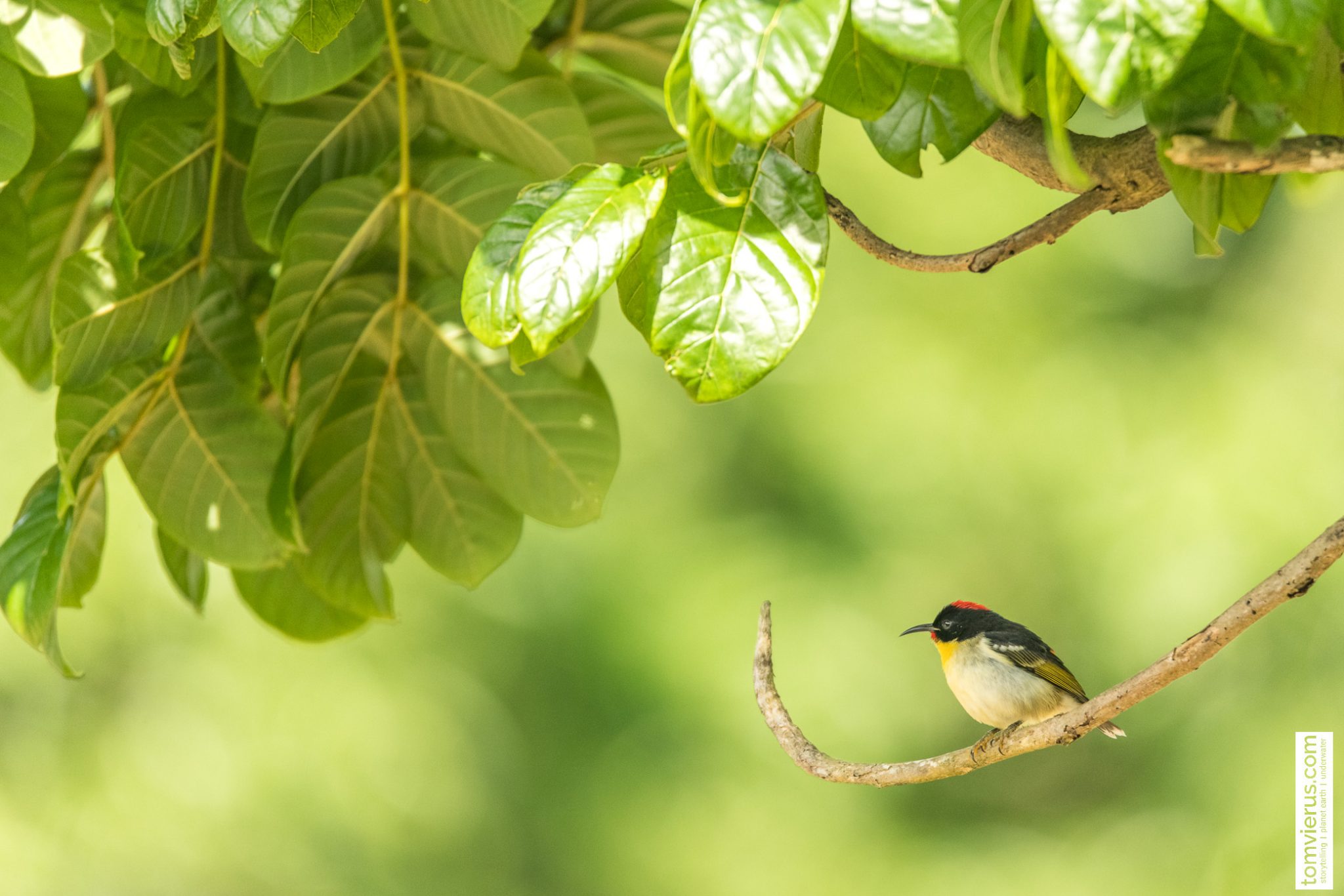
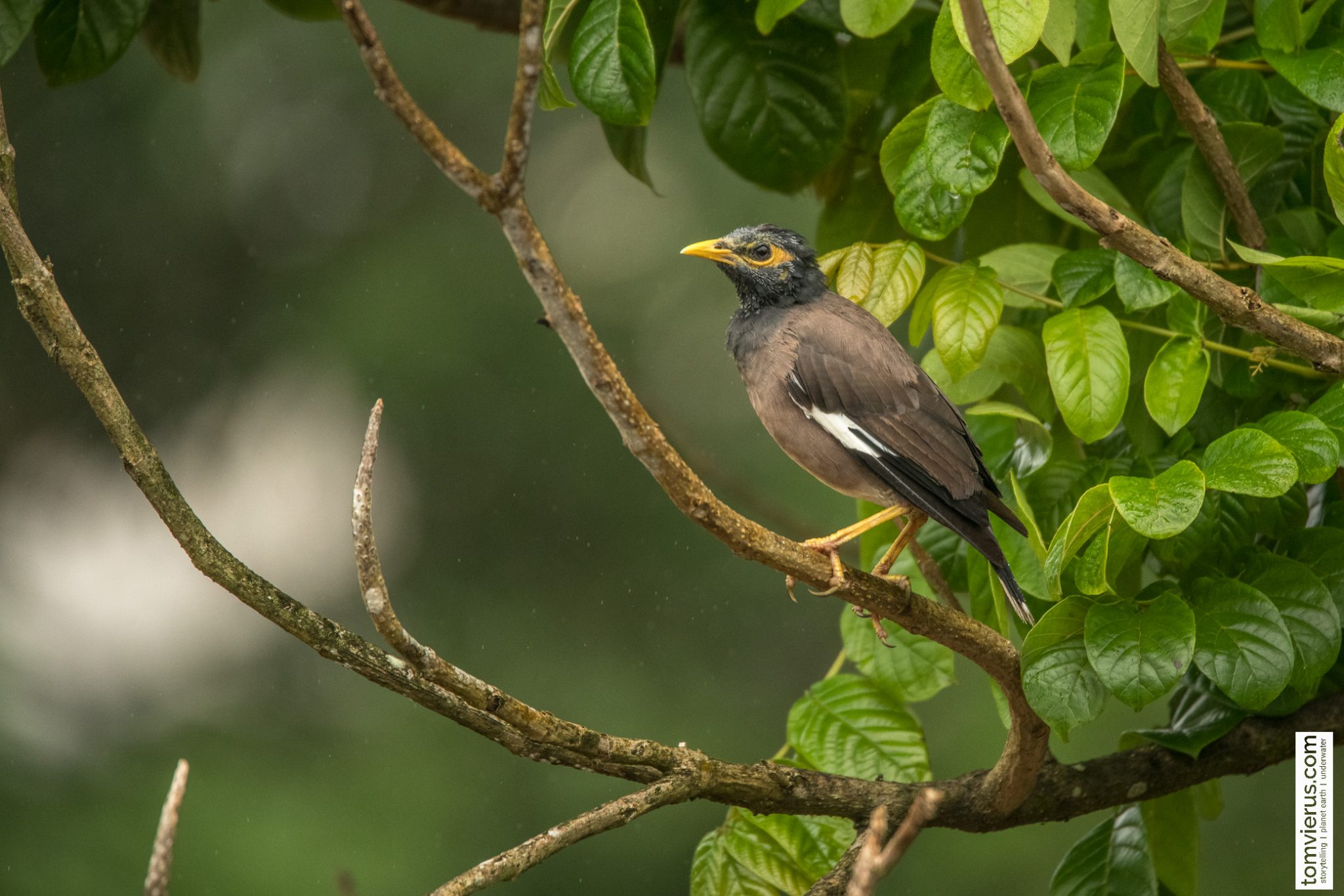
The avifauna of Fiji is the richest in West Polynesia. Numerous families reach the farthest east of their range, and the island is home to several endemic species and genera, as well as sharing several more endemics with its close neighbours Tonga and Samoa.
The birds of Fiji have been heavily impacted by the arrival of humans. Several species (and some genera) were lost in prehistory and are known only from fossil remains. Other have become extinct more recently, and some species remain very close to extinction. It is certain that the current knowledge of the previous ranges of many species is incomplete and further research is needed.
This is a list of the bird species recorded in Fiji. The avifauna of Fiji include a total of 179 species, of which 31 are endemic, and 13 have been introduced by humans. Numerous species listed have been extirpated from Fiji.
This list's taxonomic treatment (designation and sequence of orders, families and species) and nomenclature (common and scientific names) follow the conventions of The Clements Checklist of Birds of the World, 2022 edition. The family accounts at the beginning of each heading reflect this taxonomy, as do the species counts found in each family account. Introduced and accidental species are included in the total counts for Fiji. There are also a few species listed that have been recorded in Fiji, but not known to what specific island they were recorded at.
The following tags have been used to highlight several categories.
- (V) Vagrant - a species that rarely or accidentally occurs in Fiji
- (B) Breeder - a species that breeds in Fiji
- (M) Migrant - a species that regularly migrates to Fiji
- (P) Passage migrant - a species that neither breeds nor winters in Fiji but regularly passes through
- (I) Introduced - a species introduced to Fiji as a consequence, direct or indirect, of human actions
- (X) Extirpated - a species that no longer occurs here although populations may exist elsewhere
- (*) Endemic - a species that is endemic to Fiji
- (?) Uncertain - a species with uncertain records or current status
Ducks, geese, and waterfowl
Order: Anseriformes Family: Anatidae
Anatidae includes the ducks and most duck-like waterfowl, such as geese and swans. These birds are adapted to an aquatic existence with webbed feet, flattened bills, and feathers that are excellent at shedding water due to an oily coating.
Megapodes
Order: Galliformes Family: Megapodiidae
The Megapodiidae are stocky, medium-large chicken-like birds with small heads and large feet. All but the malleefowl occupy jungle habitats and most have brown or black colouring.
Sylviornithids
Pangalliformes Family: Sylviornithidae
Sylviornithids are an extinct lineage of flightless birds related to modern Galliformes. They are represented by two species, one of them native to Fiji.
Pheasants, grouse, and allies
Order: Galliformes Family: Phasianidae
The Phasianidae are a family of terrestrial birds. In general, they are plump (although they vary in size) and have broad, relatively short wings.
Pigeons and doves
Order: Columbiformes Family: Columbidae
Pigeons and doves are stout-bodied birds with short necks and short slender bills with a fleshy cere.
Cuckoos
Order: Cuculiformes Family: Cuculidae
The family Cuculidae includes cuckoos, roadrunners and anis. These birds are of variable size with slender bodies, long tails and strong legs. The Old World cuckoos are brood parasites.
Frogmouths
Order: Caprimulgiformes Family: Podargidae
The frogmouths are a group of nocturnal birds related to the nightjars. They are named for their large flattened hooked bill and huge frog-like gape, which they use to take insects.
Swifts
Order: Caprimulgiformes Family: Apodidae
Swifts are small birds which spend the majority of their lives flying. These birds have very short legs and never settle voluntarily on the ground, perching instead only on vertical surfaces. Many swifts have long swept-back wings which resemble a crescent or boomerang.
Rails, gallinules, and coots
Order: Gruiformes Family: Rallidae
Rallidae is a large family of small to medium-sized birds which includes the rails, crakes, coots and gallinules. Typically they inhabit dense vegetation in damp environments near lakes, swamps or rivers. In general they are shy and secretive birds, making them difficult to observe. Most species have strong legs and long toes which are well adapted to soft uneven surfaces. They tend to have short, rounded wings and to be weak fliers.
Plovers and lapwings
Order: Charadriiformes Family: Charadriidae
The family Charadriidae includes the plovers, dotterels and lapwings. They are small to medium-sized birds with compact bodies, short, thick necks and long, usually pointed, wings. They are found in open country worldwide, mostly in habitats near water.
Sandpipers and allies
Order: Charadriiformes Family: Scolopacidae
Scolopacidae is a large diverse family of small to medium-sized shorebirds including the sandpipers, curlews, godwits, shanks, tattlers, woodcocks, snipes, dowitchers and phalaropes. The majority of these species eat small invertebrates picked out of the mud or soil. Variation in length of legs and bills enables multiple species to feed in the same habitat, particularly on the coast, without direct competition for food.
Skuas and jaegers
Order: Charadriiformes Family: Stercorariidae
The family Stercorariidae are, in general, medium to large birds, typically with grey or brown plumage, often with white markings on the wings. They nest on the ground in temperate and arctic regions and are long-distance migrants.
Gulls, terns, and skimmers
Order: Charadriiformes Family: Laridae
Laridae is a family of medium to large seabirds, the gulls, terns, and skimmers. Gulls are typically grey or white, often with black markings on the head or wings. They have stout, longish bills and webbed feet. Terns are a group of generally medium to large seabirds typically with grey or white plumage, often with black markings on the head. Most terns hunt fish by diving but some pick insects off the surface of fresh water. Terns are generally long-lived birds, with several species known to live in excess of 30 years.
Tropicbirds
Order: Phaethontiformes Family: Phaethontidae
Tropicbirds are slender white birds of tropical oceans, with exceptionally long central tail feathers. Their heads and long wings have black markings.
Albatrosses
Order: Procellariiformes Family: Diomedeidae
The albatrosses are among the largest of flying birds, and the great albatrosses from the genus Diomedea have the largest wingspans of any extant birds.
Southern storm-petrels
Order: Procellariiformes Family: Oceanitidae
The southern storm-petrels are relatives of the petrels and are the smallest seabirds. They feed on planktonic crustaceans and small fish picked from the surface, typically while hovering. The flight is fluttering and sometimes bat-like.
Northern storm-petrels
Order: Procellariiformes Family: Hydrobatidae
Though the members of this family are similar in many respects to the southern storm-petrels, including their general appearance and habits, there are enough genetic differences to warrant their placement in a separate family.
Shearwaters and petrels
Order: Procellariiformes Family: Procellariidae
The procellariids are the main group of medium-sized "true petrels", characterised by united nostrils with medium septum and a long outer functional primary.
Frigatebirds
Order: Suliformes Family: Fregatidae
Frigatebirds are large seabirds usually found over tropical oceans. They are large, black-and-white or completely black, with long wings and deeply forked tails. The males have coloured inflatable throat pouches. They do not swim or walk and cannot take off from a flat surface. Having the largest wingspan-to-body-weight ratio of any bird, they are essentially aerial, able to stay aloft for more than a week.
Boobies and gannets
Order: Suliformes Family: Sulidae
The sulids comprise the gannets and boobies. Both groups are medium to large coastal seabirds that plunge-dive for fish.
Pelicans
Order: Pelecaniformes Family: Pelecanidae
Pelicans are large water birds with a distinctive pouch under their beak. As with other members of the order Pelecaniformes, they have webbed feet with four toes.
Herons, egrets, and bitterns
Order: Pelecaniformes Family: Ardeidae
The family Ardeidae contains the bitterns, herons and egrets. Herons and egrets are medium to large wading birds with long necks and legs. Bitterns tend to be shorter necked and more wary. Members of Ardeidae fly with their necks retracted, unlike other long-necked birds such as storks, ibises and spoonbills.
Ibises and spoonbills
Order: Pelecaniformes Family: Threskiornithidae
Threskiornithidae is a family of large terrestrial and wading birds which includes the ibises and spoonbills. They have long, broad wings with 11 primary and about 20 secondary feathers. They are strong fliers and despite their size and weight, very capable soarers.
Hawks, eagles, and kites
Order: Accipitriformes Family: Accipitridae
Accipitridae is a family of birds of prey, which includes hawks, eagles, kites, harriers and Old World vultures. These birds have powerful hooked beaks for tearing flesh from their prey, strong legs, powerful talons and keen eyesight.
Barn-owls
Order: Strigiformes Family: Tytonidae
Barn owls are medium to large owls with large heads and characteristic heart-shaped faces. They have long strong legs with powerful talons. There are 16 species worldwide and 2 species which occur in Fiji.
Kingfishers
Order: Coraciiformes Family: Alcedinidae
Kingfishers are medium-sized birds with large heads, long, pointed bills, short legs and stubby tails.
Falcons
Order: Falconiformes Family: Falconidae
Falconidae is a family of diurnal birds of prey. They differ from hawks, eagles and kites in that they kill with their beaks instead of their talons.
Old World parrots
Order: Psittaciformes Family: Psittaculidae
Characteristic features of parrots include a strong curved bill, an upright stance, strong legs, and clawed zygodactyl feet. Many parrots are vividly coloured, and some are multi-coloured. In size they range from 8 cm (3.1 in) to 1 m (3.3 ft) in length. Old World parrots are found from Africa east across south and southeast Asia and Oceania to Australia and New Zealand.
Honeyeaters
Order: Passeriformes Family: Meliphagidae
The honeyeaters are a large and diverse family of small to medium-sized birds most common in Australia and New Guinea. They are nectar feeders and closely resemble other nectar-feeding passerines.
Cuckooshrikes
Order: Passeriformes Family: Campephagidae
The cuckooshrikes are small to medium-sized passerine birds. They are predominantly greyish with white and black, although some species are brightly coloured.
Whistlers and allies
Order: Passeriformes Family: Pachycephalidae
The family Pachycephalidae includes the whistlers, shrikethrushes, and some of the pitohuis.
Woodswallows, bellmagpies, and allies
Order: Passeriformes Family: Artamidae
The woodswallows are soft-plumaged, somber-coloured passerine birds. They are smooth, agile flyers with moderately large, semi-triangular wings. The cracticids: currawongs, bellmagpies and butcherbirds, are similar to the other corvids. They have large, straight bills and mostly black, white or grey plumage. All are omnivorous to some degree.
Fantails
Order: Passeriformes Family: Rhipiduridae
The fantails are small insectivorous birds which are specialist aerial feeders.
Monarch flycatchers
Order: Passeriformes Family: Monarchidae
The monarch flycatchers are small to medium-sized insectivorous passerines which hunt by flycatching.
Australasian robins
Order: Passeriformes Family: Petroicidae
Most species of Petroicidae have a stocky build with a large rounded head, a short straight bill and rounded wingtips. They occupy a wide range of wooded habitats, from subalpine to tropical rainforest, and mangrove swamp to semi-arid scrubland. All are primarily insectivores, although a few supplement their diet with seeds.
Grassbirds and allies
Order: Passeriformes Family: Locustellidae
Locustellidae are a family of small insectivorous songbirds found mainly in Eurasia, Africa, and the Australian region. They are smallish birds with tails that are usually long and pointed, and tend to be drab brownish or buffy all over.
Swallows
Order: Passeriformes Family: Hirundinidae
The family Hirundinidae is adapted to aerial feeding. They have a slender streamlined body, long pointed wings and a short bill with a wide gape. The feet are adapted to perching rather than walking, and the front toes are partially joined at the base.
Bulbuls
Order: Passeriformes Family: Pycnonotidae
Bulbuls are medium-sized songbirds. Some are colourful with yellow, red or orange vents, cheeks, throats or supercilia, but most are drab, with uniform olive-brown to black plumage. Some species have distinct crests.
Bush warblers and allies
Order: Passeriformes Family: Scotocercidae
The members of this family are found throughout Africa, Asia, and Polynesia. Their taxonomy is in flux, and some authorities place some genera in other families.
White-eyes, yuhinas, and allies
Order: Passeriformes Family: Zosteropidae
The white-eyes are small and mostly undistinguished, their plumage above being generally some dull colour like greenish-olive, but some species have a white or bright yellow throat, breast or lower parts, and several have buff flanks. As their name suggests, many species have a white ring around each eye.
Starlings
Order: Passeriformes Family: Sturnidae
Starlings are small to medium-sized passerine birds. Their flight is strong and direct and they are very gregarious. Their preferred habitat is fairly open country. They eat insects and fruit. Plumage is typically dark with a metallic sheen.
Thrushes and allies
Order: Passeriformes Family: Turdidae
The thrushes are a group of passerine birds that occur mainly in the Old World. They are plump, soft plumaged, small to medium-sized insectivores or sometimes omnivores, often feeding on the ground. Many have attractive songs.
Waxbills and allies
Order: Passeriformes Family: Estrildidae
The estrildid finches are small passerine birds of the Old World tropics and Australasia. They are gregarious and often colonial seed eaters with short thick but pointed bills. They are all similar in structure and habits, but have wide variation in plumage colours and patterns.
Old World sparrows
Order: Passeriformes Family: Passeridae
Old World sparrows are small passerine birds. In general, sparrows tend to be small, plump, brown or grey birds with short tails and short powerful beaks. Sparrows are seed eaters, but they also consume small insects.
See also
- List of birds
- Lists of birds by region
References
- Lepage, Denis. "Checklist of Birds of Fiji". Bird Checklists of the World. Avibase. Retrieved 28 January 2020.
- Clements, James F. (2000). Birds of the World: A Checklist. Cornell University Press. p. 880. ISBN 0-934797-16-1.
- Pratt, H., Bruner, P & Berrett, D. (1987) The Birds of Hawaii and the Tropical Pacific Princeton University Press: Princeton ISBN 0-691-08402-5
- Steadman D, (2006). Extinction and Biogeography in Tropical Pacific Birds, University of Chicago Press. ISBN 978-0-226-77142-7
Notes